

The Redmi Note 17 arrives in 2026 with a clear focus on two things: a massive battery and a large OLED display. Xiaomi has also introduced a refreshed design, a newer processor and a high-capacity silicon-carbon battery. However, the phone comes with several compromises that become difficult to ignore at its price.
With the Redmi Note 17 priced at Rs. 27,999 for the 6GB RAM + 128GB storage variant, the question is simple: does its huge battery and impressive display make up for its weaker camera, entry-level processor and limited internal storage ? After using the phone, the answer is not straightforward.
Redmi Note 17 Design and Build Quality
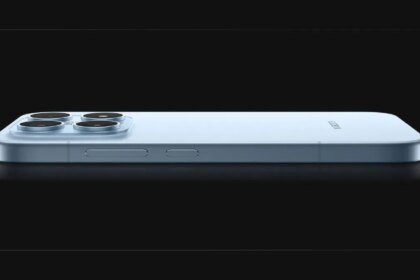
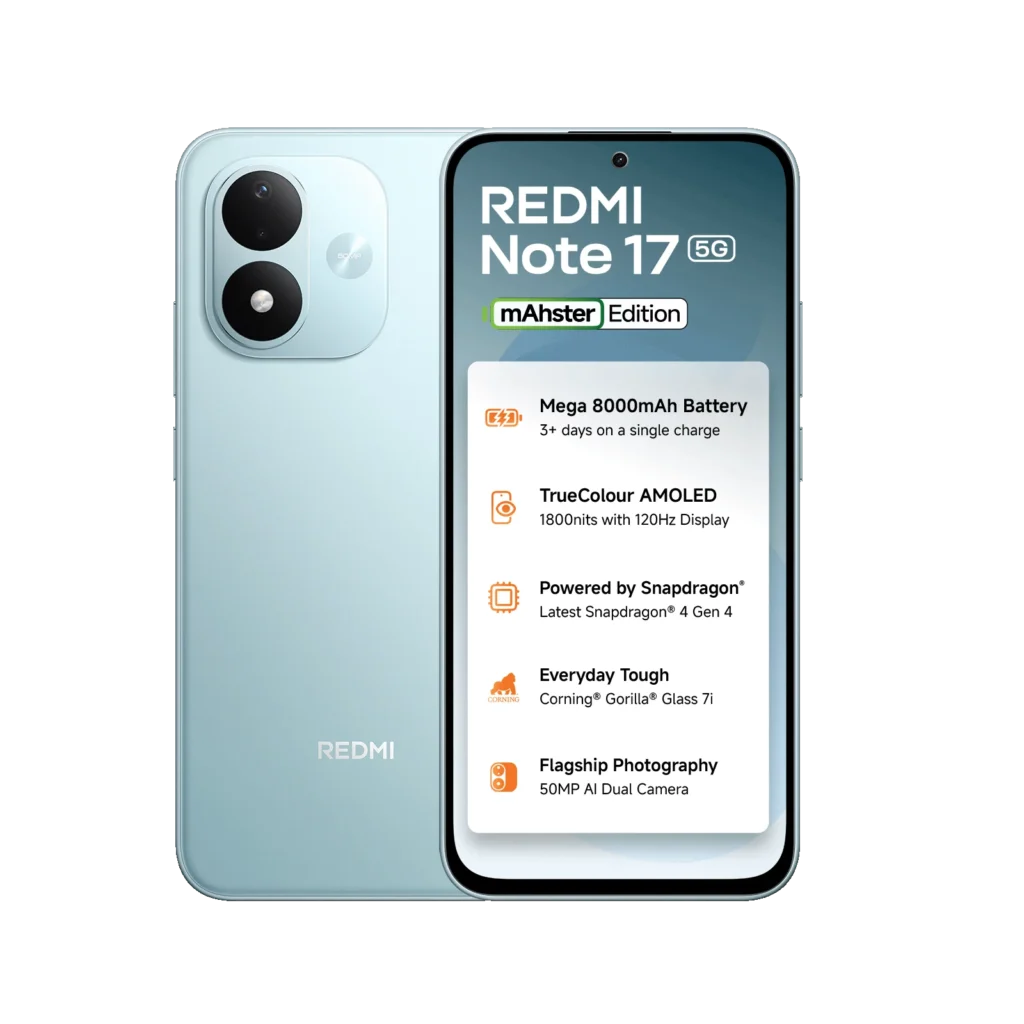
The Redmi Note 17 gets a completely redesigned look. Xiaomi has moved away from the curved design of its predecessor and adopted a flatter frame and rear panel. The phone measures 169.70 x 79.14 x 8.4mm and weighs 225 grams, making it a fairly large and heavy smartphone.
Its matte rear panel does a good job of resisting fingerprints, while the subtle texture creates attractive reflections when viewed from different angles. However, the smooth finish can feel slippery in the hand. Thankfully, Xiaomi includes a silicone case in the box.
The phone carries an IP65 rating for dust and water resistance. This is actually a step down from the IP66 rating offered on the Redmi Note 15, which is disappointing for a newer model.
The Redmi Note 17 is available in Arctic Blue, Starlight Purple and Dark Night colour options.
Redmi Note 17 Display: One of Its Biggest Strengths
The display is arguably one of the best features of the Redmi Note 17. It comes with a large 6.9-inch FHD+ LTPS OLED display offering a resolution of 2,396 x 1,080 pixels. The panel supports a 120Hz refresh rate, 10-bit colour and 60-120Hz adaptive refresh rates. Display protection is provided by Corning Gorilla Glass 7i.
The OLED panel produces deep blacks and punchy colours, making the phone particularly suitable for watching YouTube, Netflix and other OTT content. Xiaomi has also included Widevine L1 certification, allowing supported streaming services to play Full HD content.
The display supports both DC dimming and PWM, which can be useful for comfortable viewing in darker environments.
However, outdoor visibility isn’t one of its strongest points. Brightness is adequate for everyday use but can struggle under strong sunlight.The audio experience is another weakness. The phone has a single bottom-firing speaker that gets loud enough for calls and videos but lacks bass and doesn’t offer the immersive experience of stereo speakers.
Also read : Redmi K100 Series Spotted on Geekbench: Powered by Snapdragon 8 Elite Gen 5 and a Massive Battery.
Software and HyperOS Experience
The Redmi Note 17 runs Android 16 with HyperOS 3. Xiaomi provides plenty of customisation through themes, icons, widgets, fonts and lock-screen options. The software also includes basic AI features alongside Google’s Gemini-powered tools.
However, the software experience isn’t completely clean. The phone comes with several preinstalled third-party applications and games. Many can be removed, but some Xiaomi apps continue to generate promotional notifications. Users can disable these notifications through Settings.
More Read

The presence of advertisements in certain system apps, including File Manager, can also be annoying for a phone in this price segment. Xiaomi promises four years of OS updates and six years of security maintenance releases, which is a positive point for long-term users.
Redmi Note 17 Performance
Under the hood, the Redmi Note 17 uses the Qualcomm Snapdragon 4 Gen 4, paired with 6GB or 8GB LPDDR4X RAM and 128GB UFS 2.2 storage. The biggest issue here is the processor. Snapdragon 4 Gen 4 is an entry-level chipset, and its performance doesn’t really match what many buyers would expect from a smartphone costing nearly Rs. 28,000.
Everyday Xiaomi apps generally run smoothly, but noticeable stuttering can occur while browsing Google and third-party applications. The Google Discover feed can also feel less smooth during scrolling.
Gaming performance is similarly limited. Call of Duty: Mobile is playable at medium graphics with a high frame-rate setting, but increasing the graphics quality results in significant frame drops. The touch response also isn’t ideal for demanding FPS gaming. Storage is another compromise. There is only 128GB of internal storage, although Xiaomi supports microSD cards of up to 2TB through its hybrid SIM slot. This means users have to choose between a second SIM and expandable storage.
Redmi Note 17 Camera Review
The camera setup is arguably the phone’s biggest weakness. The Redmi Note 17 features a 50-megapixel primary camera with autofocus and an 8-megapixel selfie camera. The rear setup is otherwise very basic, with the additional sensor not providing the versatility expected from a mid-range phone.
Daylight photos offer limited dynamic range and detail. Bright areas can lose information, while shadows don’t retain enough detail. Autofocus can also feel slow, particularly in difficult lighting.
Portrait shots aren’t particularly impressive either, with washed-out colours and weaker contrast.Low-light photography is even more disappointing. Images can look soft and lack useful detail. Video recording is limited to 1080p at 30fps, and the phone doesn’t offer OIS or EIS. As a result, handheld video can appear noticeably shaky, especially while walking or panning.
Also read : iQOO 15 Ultra Global Launch Near ? EEC Certification Hints at International Release.
Redmi Note 17 Battery Life
Battery life is where the Redmi Note 17 truly shines. It packs a huge 8,000mAh silicon-carbon battery with support for 45W wired charging. A compatible charger is included in the box. The battery takes around 1 hour and 54 minutes to fully charge using the bundled charger. In the PCMark Work Battery Life test, the phone managed 19 hours and 26 minutes.
For normal usage, the Redmi Note 17 can comfortably last around two days. Heavy users can still expect roughly a day and a half depending on calls, streaming, gaming and other activities. The combination of a large battery, OLED display and power-efficient chipset makes endurance one of the phone’s strongest selling points.
Redmi Note 17 Verdict
At Rs. 27,999, the Redmi Note 17 is difficult to recommend without reservations. If your priorities are a large OLED display and extremely long battery life, the phone makes sense. But buyers expecting strong cameras, powerful performance and generous internal storage may be disappointed.
The biggest compromises are the entry-level Snapdragon 4 Gen 4 processor, basic camera system and 128GB storage limit. The downgrade to IP65 protection and the lack of stereo speakers are additional drawbacks.
Also read : Best Mobiles Under ₹40000 in India (2026): Top 5 Smartphones Compared.
Redmi Note 17 Pros and Cons
Pros
- Large 6.9-inch OLED display
- 120Hz refresh rate
- Massive 8,000mAh battery
- Silicon-carbon battery technology
- Long software support
- microSD support up to 2TB
- Charger included in the box
Cons
- Entry-level processor for the price
- Weak low-light camera performance
- No OIS or EIS
- 1080p video recording limit
- Only 128GB internal storage
- Hybrid SIM/microSD slot
- Single speaker
- Heavy 225g body
- Promotional notifications and ads in some apps
My thoughts
The Redmi Note 17 feels like a smartphone built around two priorities: battery life and display quality. Its 6.9-inch OLED panel and 8,000mAh battery are genuinely attractive, but Xiaomi has made noticeable compromises in cameras, processing power, storage and audio.
At Rs. 27,999, buyers should carefully consider what matters most to them. If battery endurance and a big screen are the priority, the Redmi Note 17 delivers. If you want an all-rounder with stronger cameras and better performance, there are more compelling options in and around this price range.
Also read : Xiaomi 18 Pro Launch Leak: 2nm Chip, Dual 200MP Cameras & 7000mAh Battery.
Redmi Note 17 FAQs
Is the Redmi Note 17 worth buying ?
The Redmi Note 17 is worth considering if you primarily want a large OLED display and exceptional battery life. However, its camera and performance limitations make it less attractive for users seeking an all-round mid-range smartphone.
What is the Redmi Note 17 battery capacity ?
The Redmi Note 17 has an 8,000mAh silicon-carbon battery with 45W wired charging support.
Does Redmi Note 17 support 120Hz ?
Yes. The Redmi Note 17 features a 120Hz LTPS OLED display with adaptive 60-120Hz refresh rates.
What processor does the Redmi Note 17 use ?
The smartphone is powered by the Qualcomm Snapdragon 4 Gen 4 chipset.
Does Redmi Note 17 have expandable storage ?
Yes. The phone supports microSD cards up to 2TB, but the hybrid slot means users must choose between a second SIM and microSD storage.
Does Redmi Note 17 support 4K video recording ?
No. The maximum video recording resolution mentioned for the Redmi Note 17 is 1080p at 30fps.
How good is the Redmi Note 17 camera ?
The camera is one of the weaker areas of the phone. Daylight images have limited dynamic range and detail, while low-light photography and video stabilisation are also disappointing.